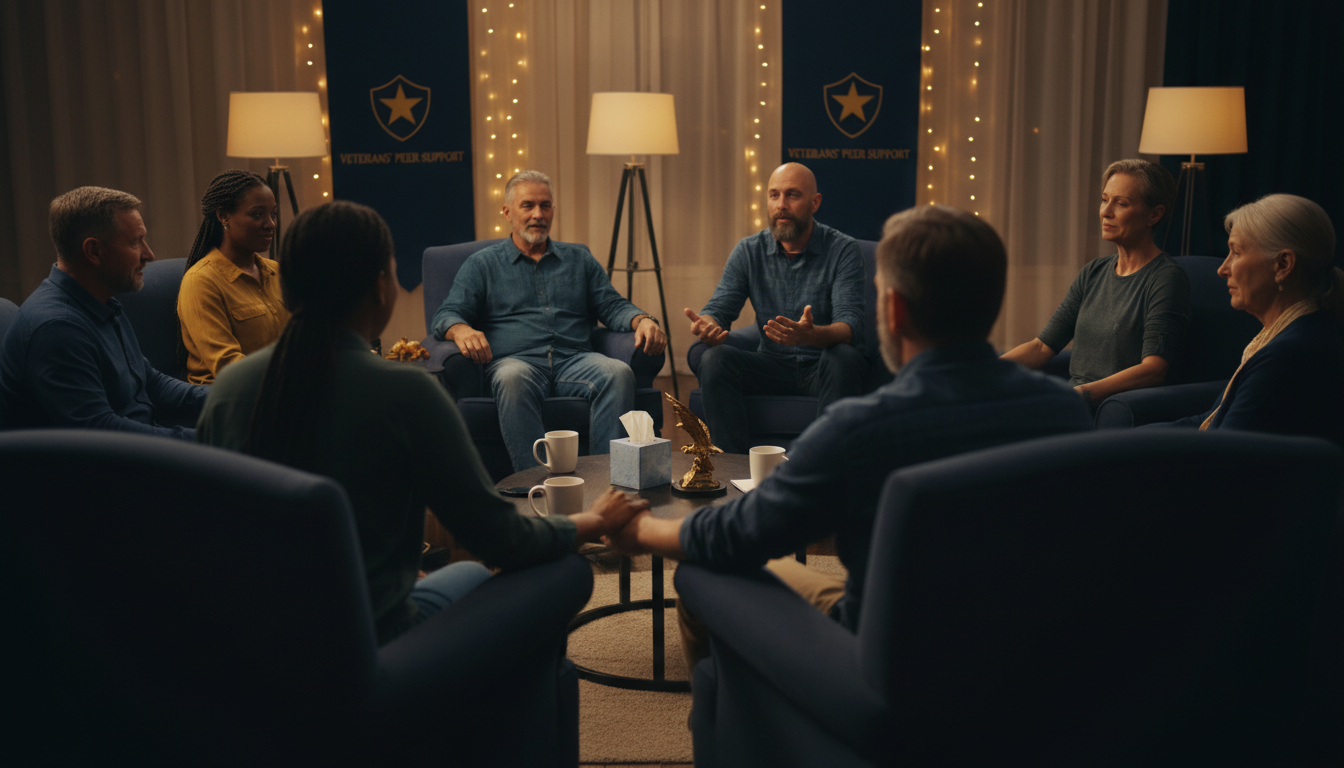
How Peer Support Groups Are Transforming Veteran Recovery
Discover how veteran-led peer support groups create powerful healing communities and accelerate recovery from combat-related trauma.
Why Peer Support Groups Are Transforming Veteran Recovery
Finding Strength Through Shared Experience
For many veterans, the transition from military to civilian life can feel isolating. The structure, camaraderie, and sense of purpose experienced during service are often difficult to replace.
That’s why peer support groups for veterans are becoming one of the most powerful tools in recovery. These groups provide a safe space where veterans can connect, share experiences, and support one another in ways that traditional programs sometimes cannot.
Why Peer Support Works
Connection That Can’t Be Replaced
Peer support is built on one key principle: shared experience creates trust.
Veterans often feel more comfortable opening up to others who have faced similar challenges. This connection helps:
- Reduce feelings of isolation
- Build trust and understanding
- Encourage open conversations
- Normalize struggles after service
Unlike clinical environments, peer groups create a sense of belonging that feels natural and authentic.
Addressing Mental and Emotional Challenges
Healing Through Community
Many veterans face invisible battles such as PTSD, anxiety, depression, and stress related to reintegration.
Peer support groups help address these challenges by:
- Providing emotional support in a judgment-free environment
- Encouraging healthy coping strategies
- Offering real-life insights from others who have navigated similar paths
- Reinforcing that recovery is possible
This type of support often complements professional mental health care, creating a more complete recovery system.
Rebuilding Purpose After Service
From Isolation to Identity
One of the biggest challenges veterans face is the loss of identity after leaving the military.
Peer groups help veterans rediscover purpose by:
- Creating opportunities to mentor others
- Encouraging leadership within the group
- Building confidence through shared progress
- Reconnecting veterans with a sense of mission
These experiences can be life-changing, helping veterans move forward with clarity and direction.
The Role of Organizations and Programs
Expanding Access to Peer Support
Many charities and nonprofit organizations that help veterans are now prioritizing peer support as a core part of their programs.
These organizations offer:
- In-person support groups in local communities
- Virtual meetings for increased accessibility
- Structured peer mentorship programs
- Integration with mental health and wellness services
This expansion ensures that more veterans can access the support they need, regardless of location.
Technology and the Future of Peer Support
Connecting Veterans Anywhere
In 2026, technology is playing a major role in expanding peer support networks.
Veterans can now connect through:
- Online support communities
- Mobile apps designed for veteran wellness
- Virtual group sessions and forums
- Anonymous peer-to-peer platforms
These tools remove barriers and make it easier than ever to find support.
Turning Support Into Action
How You Can Help
If you’re looking to support veteran recovery programs, there are several ways to make a difference:
- Support organizations that offer peer support groups
- Volunteer to help facilitate or organize community programs
- Raise awareness about the importance of peer connection
- Encourage veterans to seek out support networks
Every action helps strengthen the system that supports those who served.
Why Peer Support Matters
Healing Happens Together
Recovery is not something veterans should have to face alone. Peer support groups prove that healing happens faster—and more effectively—when people come together.
By fostering connection, trust, and shared growth, these groups are transforming how veterans recover and rebuild their lives.
Final Thoughts
Peer support groups are more than just meetings—they are lifelines.
As more organizations recognize their impact, these programs will continue to play a critical role in veteran recovery and mental health support.
For veterans seeking connection, understanding, and a path forward, peer support may be one of the most powerful resources available.